
Six ways a daily practice supports you
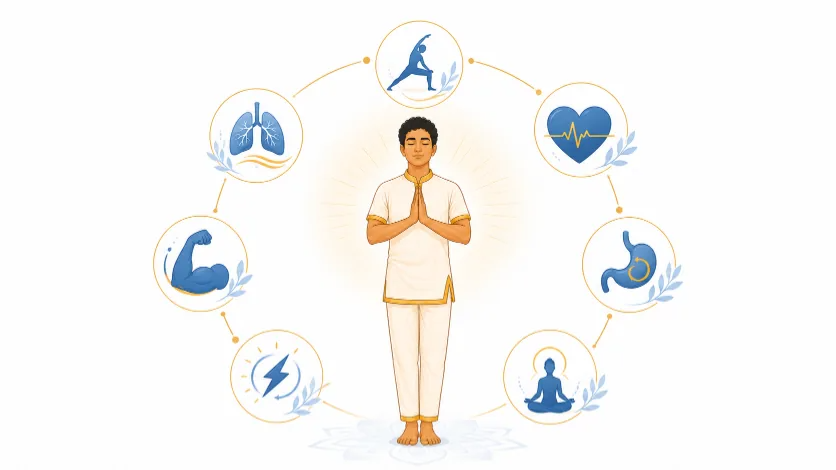
Full body exercise
Engages the arms, legs, shoulders, and core in one flowing sequence, with no equipment needed.
Improves flexibility
Moves the spine and hips through nearly their full range of motion in every cycle.
Better blood circulation
Alternating forward and backward bends support steady, healthy blood flow through the body.
Mental calmness
Coordinated breath and continuous movement support focus and a settled, quieter mind.
Better digestion
Gentle compression and stretch through the abdomen with each fold may support digestive comfort.
Improves energy
A short daily round is a natural way to feel more awake and energised through the day.
Why Surya Namaskaram is practised at sunrise
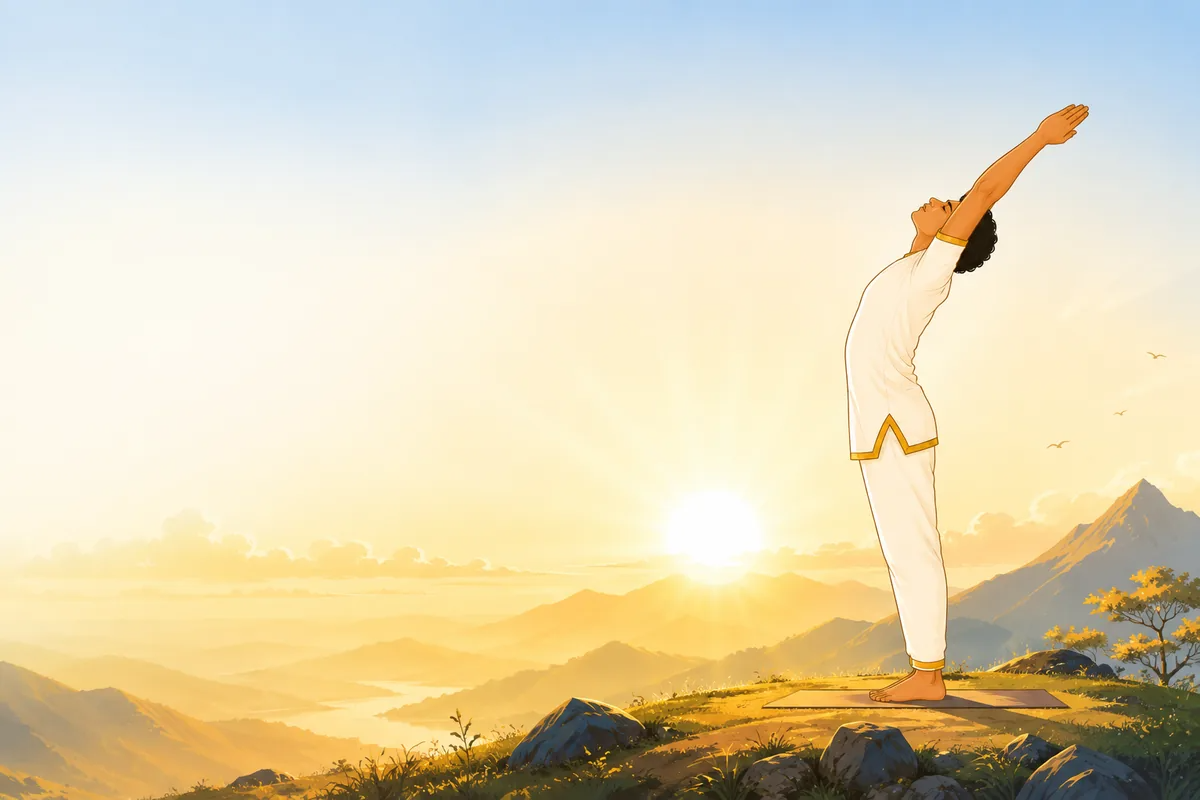
Surya Namaskaram can be practised morning or evening, but it is traditionally done at sunrise, facing east. The sequence is designed to energise and prepare the body before other asanas — it activates circulation, breath, and focus in a way that primes the system for the practice that follows.
The twelve postures form one cycle, and a full practice is typically built from three to twelve repeated cycles. This is not incidental: the structure reflects a broader principle in yoga of working with the body’s cycles — of breath, of movement, of the day itself — rather than against them. Each posture is paired with a specific inhalation or exhalation, so the sequence trains coordinated breathing as much as it trains the body.
The 12 postures of Surya Namaskaram
Each round moves through the same twelve postures, alternating which leg steps back in postures 4 and 9 on the following round.
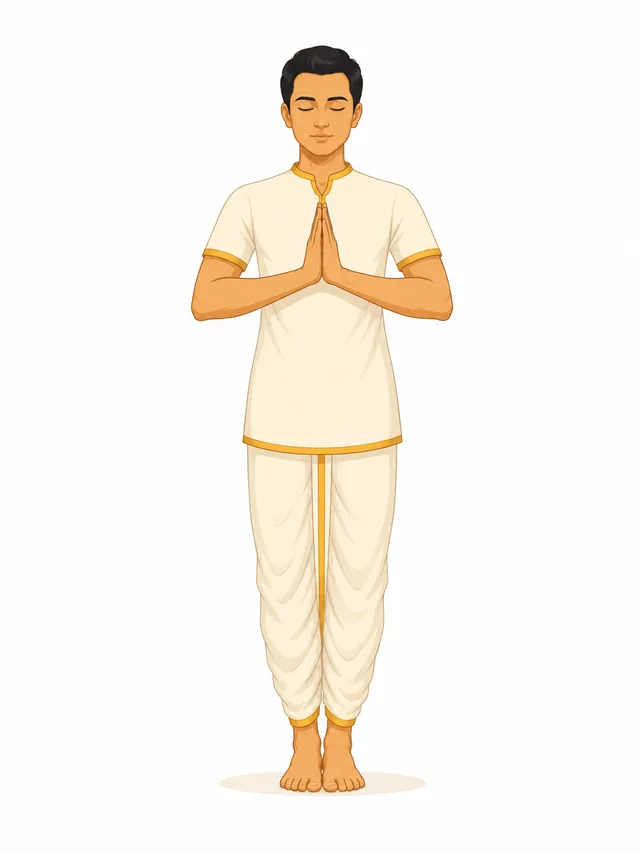
Posture 1: Pranamasanam
Stand on the mat facing east, palms together in front of the chest, feet close together, breathing normally. This centres attention and breath before movement begins.
• Normal breathing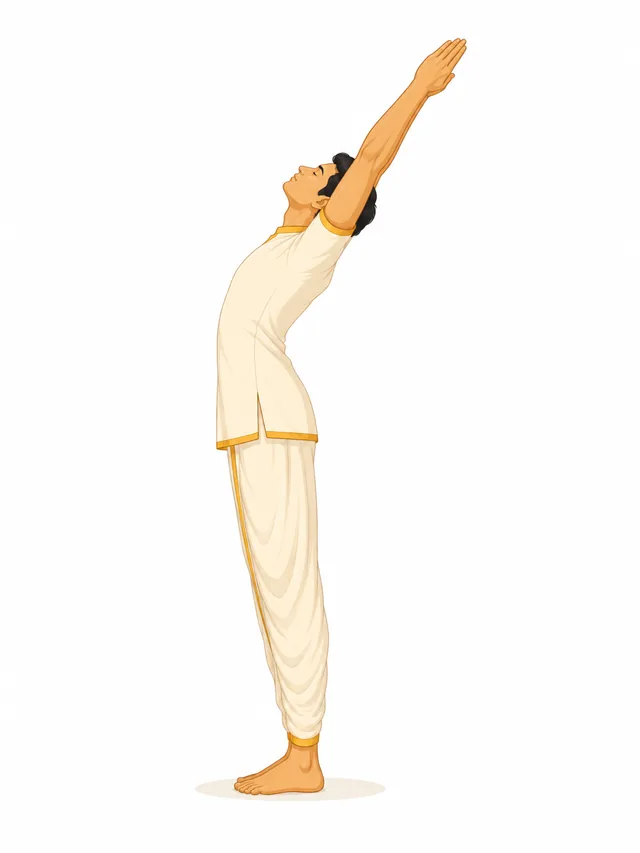
Posture 2: Hastha Uddhanasanam
Raise the arms above the head with a deep breath, bending the body slightly backward without bending the knees. This opens the chest and stretches the front of the body.
↑ Inhale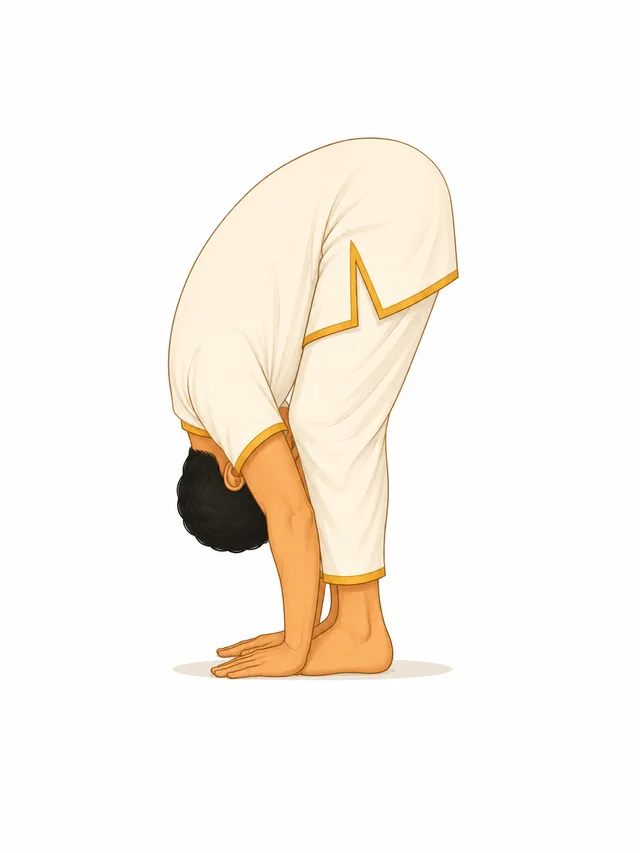
Posture 3: Padahasthasanam
Bend forward at the waist while breathing out, without bending the knees. Place the palms on the mat beside the feet, trying to touch the knees with the forehead. This stretches the hamstrings and spine.
↓ Exhale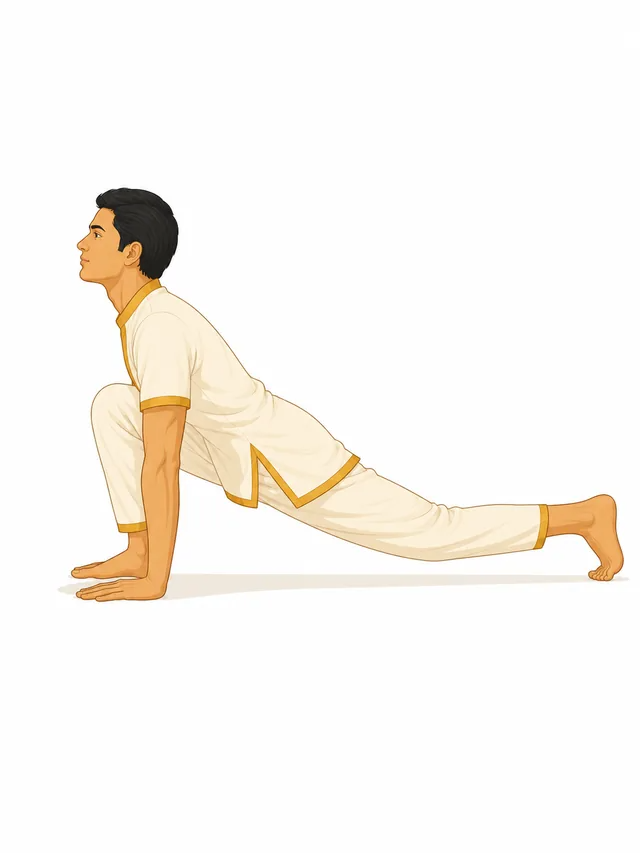
Posture 4: Chanchalana Asanam
Take a breath and extend the right leg backward, placing the left leg between the arms, looking straight ahead. This strengthens the legs and opens the hips.
↑ Inhale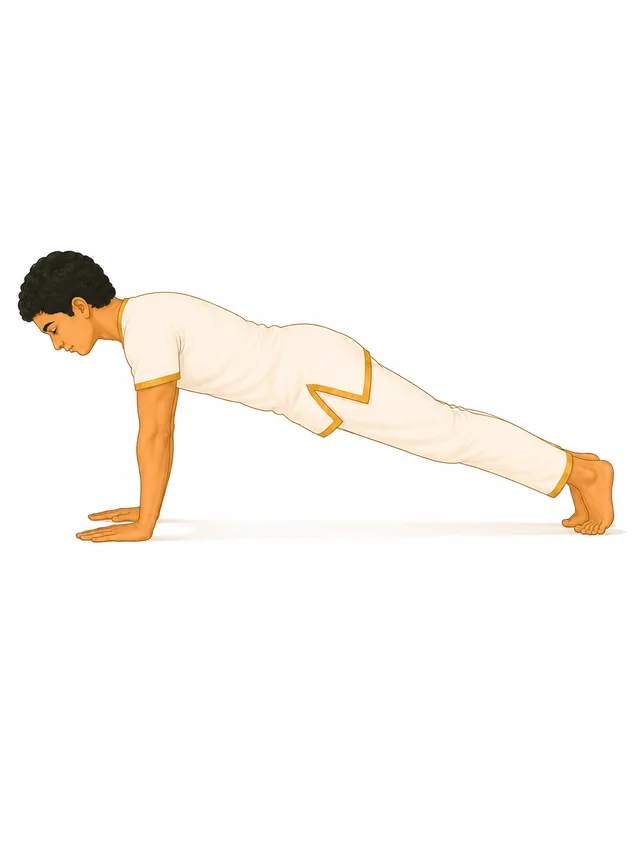
Posture 5: Thuvi Pada Hastha Chanchalana Asanam
Stretch the left leg backward and bring the feet close together, keeping the body in a straight line from head to feet without touching the ground, retaining the breath within (kumbhaka). This builds core and arm strength.
● Retain (kumbhaka)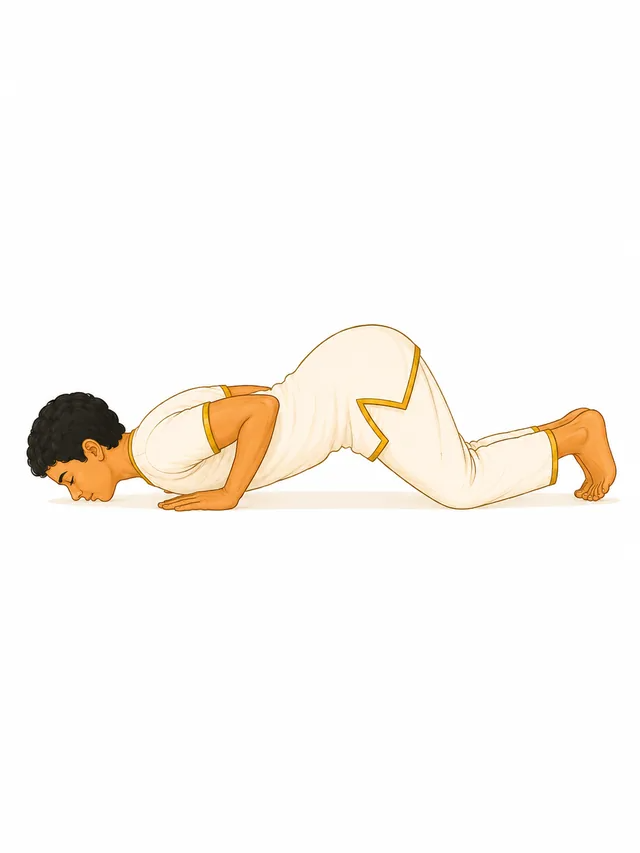
Posture 6: Ashtanga Namaskaram
Release the breath slowly and lower the body to the mat without shifting the arms. Only the forehead, chest, and knees touch the mat, with the buttocks raised — eight parts of the body in contact with the ground. This strengthens the arms, chest, and shoulders.
↓ Exhale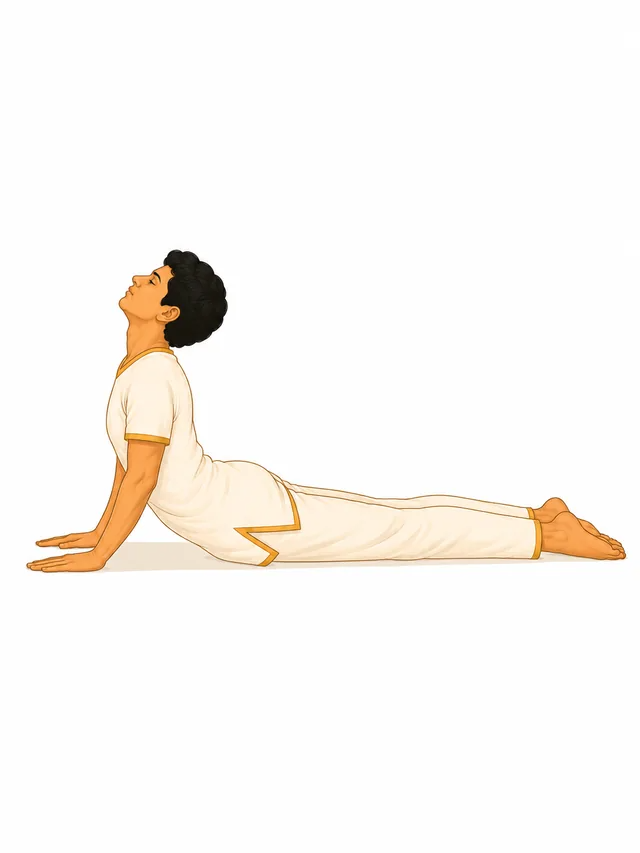
Posture 7: Bhujangasanam
Take a breath and raise the head and chest off the mat, keeping the abdomen down. This strengthens the spine and opens the chest for fuller breathing.
↑ Inhale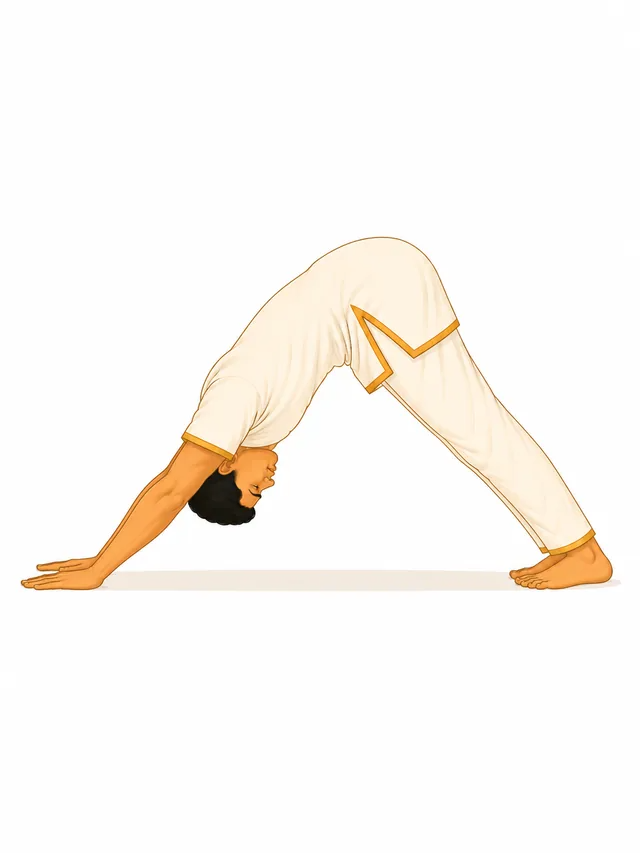
Posture 8: Athamukthasanam
Release the breath slowly and raise the buttocks off the mat, hands and feet remaining stationary, head bent downward, feet planted firmly — the body resembling the shape of the letter “A”. This stretches the hamstrings, calves, and shoulders.
↓ Exhale
Posture 9: Aswachanchalanasanam
Take a breath, keeping the hands in place, bend the right knee and bring the leg forward between the arms, raising the head. This repeats the lunge on the alternating side, balancing the sequence.
↑ Inhale
Posture 10: Padahastha Asanam
Release the breath and bring the left leg forward next to the right, forehead touching the knees, hands and legs parallel. This repeats the forward fold as the body returns toward standing.
↓ Exhale
Posture 11: Hastha Uddasanam
Straighten up, take a breath, and raise the arms above the head, body bent slightly backward, as in posture 2. This completes the spinal mobilisation of the sequence.
↑ Inhale
Posture 12: Pranamasanam
Stand straight, bring the arms down, and place the palms together in front of the chest, as in posture 1. The cycle closes where it began, ready to repeat.
• Normal breathingBreathing summary for all 12 postures
Use this table as a quick reference once you know the sequence — each posture is paired with a specific breath.
| steps | Posture | Breath | Cue |
|---|---|---|---|
| 01 | Pranamasanam | Normal | Centre and settle |
| 02 | Hastha Uddhanasanam | Inhale | Reach up and back |
| 03 | Padahasthasanam | Exhale | Fold forward |
| 04 | Chanchalana Asanam | Inhale | Step back into lunge |
| 05 | Thuvi Pada Hastha Chanchalana Asanam | Retain | Hold the plank |
| 06 | Ashtanga Namaskaram | Exhale | Lower to eight points |
| 07 | Bhujangasanam | Inhale | Lift chest, open heart |
| 08 | Athamukthasanam | Exhale | Raise into the “A” shape |
| 09 | Aswachanchalanasanam | Inhale | Step forward into lunge |
| 10 | Padahastha Asanam | Exhale | Fold forward again |
| 11 | Hastha Uddasanam | Inhale | Rise and reach back |
| 12 | Pranamasanam | Normal | Return to centre |
The benefits of a consistent practice
Surya Namaskaram is designed as a wholesome, complete exercise — engaging the whole body rather than isolating individual muscle groups.
A complete, low-impact workout
The sequence engages the major muscle groups of the arms, legs, shoulders, and core without any equipment.
Support for digestion and circulation
The alternating forward and backward bends gently compress and stretch the abdominal organs, which may support digestion, and the continuous movement supports healthy blood circulation.
Greater spinal and hip flexibility
Moving the spine through nearly its full range of motion in each cycle helps keep the vertebral column and hip joints flexible over time.
Strength across the whole body
The plank, lunge, and cobra-style postures build functional strength through the arms, legs, shoulders, and core.
A calmer, steadier mind
The combination of coordinated breath and continuous movement supports mental focus and a sense of calm; practitioners report improved peace of mind with regular practice.
Support for overall wellness
Practitioners report improvements in energy, skin health, and general wellbeing as part of a consistent practice, alongside a wholesome approach to health.
Surya Namaskaram is a complementary wellness practice. It supports overall health but is not a substitute for professional medical diagnosis or treatment — please consult a qualified healthcare provider for any health condition before relying on yoga as a management strategy.
Getting the most from your practice
A few simple habits
- Practise on an empty stomach, ideally in the morning, allowing at least two to three hours after a meal.
- Move with the breath, not against it — each posture is paired with a specific inhale or exhale for a reason; rushing the sequence breaks this coordination.
- Start with three to five rounds if you are a beginner, building gradually toward ten to twelve rounds as strength and familiarity grow.
- Consistency outperforms intensity. A short daily practice will do more for the body and mind than an occasional long one.
- Learn the sequence under guidance at first, particularly if you have back, knee, or cardiovascular conditions, to ensure correct alignment and breath coordination.
Safety precautions
- Consult a qualified healthcare provider before beginning if you are pregnant, recovering from surgery, or managing a heart condition, high blood pressure, a hernia, or a back or knee injury.
- Skip the practice, or modify it under guidance, during acute back pain, fever, or dizziness.
- Move at your own pace and avoid forcing any stretch — a gentle range of motion practised consistently is more valuable than a deep stretch practised carelessly.
- Learn the sequence from a qualified instructor when starting out, so that alignment and breath coordination are correct from the beginning.
Frequently asked questions
What are the main benefits of Surya Namaskaram?
Surya Namaskaram is a wholesome, whole-body exercise that tones the muscles, supports the digestive and circulatory systems, improves spinal and hip flexibility, and calms the mind through coordinated breathing. Practitioners report improvements in posture, energy, and overall wellbeing with regular practice.
How many rounds of Surya Namaskaram should a beginner do?
Beginners can start with three to five rounds, focusing on correct posture and steady breathing rather than speed. As strength and familiarity build, this can gradually increase to ten or twelve rounds for a fuller practice.
Is Surya Namaskaram enough exercise on its own?
Surya Namaskaram offers a well-rounded combination of strength, flexibility, and circulatory benefit, making it a strong foundation for overall fitness. Many practitioners pair it with pranayama and meditation, as taught in Simplified Kundalini Yoga, for a more complete approach to whole-person wellbeing.
From Surya Namaskaram to a complete practice
Surya Namaskaram is a genuinely complete practice on its own, and it also forms the foundation for a wider journey. In Simplified Kundalini Yoga (SKY), Surya Namaskaram is one part of a structured system that pairs physical postures with pranayama and meditation, working at the level of the body’s life force rather than the muscles alone.
Vethathiri SKY Yoga’s Foundation Course teaches Surya Namaskaram within this larger context — as one step in a complete, guided practice developed by Yogiraj Vethathiri Maharishi and practised by over 6 million seekers across 30 countries. If stress is what brought you here, how yoga relieves stress explains the deeper mechanism.
Ready to begin your SKY journey?
Learn Surya Namaskaram as part of the complete SKY Foundation Course — available online in Tamil, Telugu, Kannada, and English. No prior experience needed.
Related articles


Vethathiri SKY Yoga is the practice of Simplified Kundalini Yoga, developed by Yogiraj Vethathiri Maharishi and offered by the World Community Service Centre (WCSC). Over six million seekers across 30 countries practise SKY today.
 Launch your Graphy